

Keywords: radiation protection education, training, ALARA, professional competence, radiation safety
Introduction
In radiation protection, equipment matters. Regulations matter. But without knowledge, neither provides real safety.
Education is not an administrative formality; it is the foundation of a functioning safety system. The difference between being formally trained and genuinely competent often lies in the quality and continuity of education.
Education as the Basis of Safety Culture
A safety culture does not emerge from signed documents. It develops from understanding:
- why measurements are performed
- what the measured values actually mean
- the real consequences of misinterpretation
- the limits of uncertainty
A professional who understands the principles of protection makes better decisions in both routine and emergency situations. That level of judgement cannot be achieved through one-off training.
From Compliance to Practical Application
Regulations clearly require training. The real question is whether education stops at minimum compliance or goes further.
High-quality training includes:
- real workplace case studies
- analysis of actual dosimetric data
- discussion of common errors
- emergency response scenarios
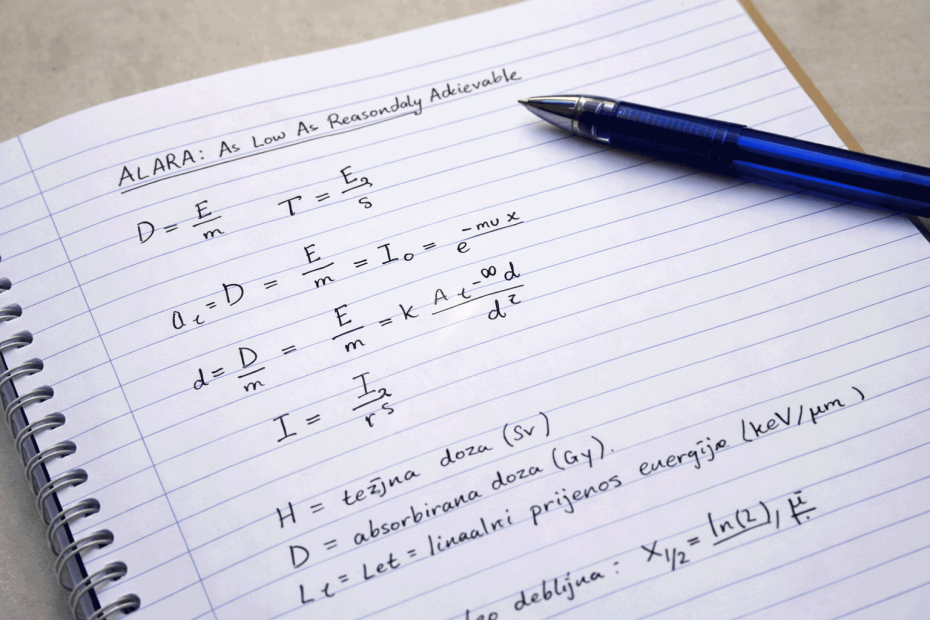
- practical implementation of optimisation (ALARA)
Only then does optimisation become a working principle rather than a theoretical concept.
New Challenges Require New Knowledge
Radiation protection is evolving:
- advanced radiotherapy techniques
- digital dosimetry and real-time monitoring
- increasingly complex industrial processes
- growing regulatory and public expectations
Without continuous professional development, practice quickly becomes outdated.
Ongoing education is not optional. It is a professional obligation.
Conclusion
Radiation protection leaves little room for improvisation.
Education keeps expertise current, adaptable and measurable in terms of safety outcomes.
A system is only as strong as the competence of the people implementing it. And competence is built deliberately, not assumed.