


Keywords: radioactive source import Croatia, import permit, radioactive source licensing, radiation protection, nuclear security, sealed radioactive sources, radiation safety
Introduction
Radioactive sources are widely used in industrial, medical and scientific applications. Typical examples include industrial radiography, density and level measurements, well logging, laboratory research, nuclear medicine and other specialised activities.
Companies planning to acquire, import or use radioactive sources in Croatia must comply with national radiation protection and regulatory requirements. Depending on the type of source, its activity and the intended application, the procedure may involve registration, licensing, preparation of technical documentation and implementation of specific safety and security measures.
An important distinction must be made between authorisation to use a radioactive source and permission to import it. These are separate regulatory procedures, and obtaining one authorisation does not automatically cover all requirements related to acquisition, transportation, storage and use.
Which Authority Issues Radioactive Source Licences in Croatia?
The competent authority for radiation and nuclear safety in Croatia is the Ministry of the Interior, through the Civil Protection Directorate.
The national regulatory framework is primarily established by the Croatian Act on Radiological and Nuclear Safety and the associated regulations governing registration, licensing, radiation protection, nuclear security and radioactive material transport.
Depending on the planned activity and the characteristics of the radioactive source, several questions must be addressed:
- whether the activity requires registration or authorisation
- which radionuclides and activities must be covered by the licence
- what requirements apply to the facilities where sources will be used or stored
- which technical and safety documents must be prepared
- whether additional security requirements apply to the source category.
Activities requiring authorisation or registration cannot commence before the relevant regulatory procedure has been completed.
Importing from Non-EU Countries and Acquiring Sources Within the EU
The regulatory procedure depends partly on whether the radioactive source is being supplied from another EU Member State or from a country outside the European Union.
Importing Radioactive Sources from Outside the EU
Importing radioactive sources into Croatia from non-EU countries, such as the United States, the United Kingdom or Switzerland, requires an import permit.
The importer must hold the appropriate registration for radioactive source import activities. The end user must also possess the relevant authorisation or registration covering the intended activity involving the source.
An import permit application includes information about the source, importer, manufacturer and end user, together with the required supporting documents.
Depending on the source category, additional documentation may be necessary, including agreements concerning the manufacturer’s obligation to accept the source after the end of its useful life.
The import permit is issued for a specified period and does not replace the authorisation required to use the source.
Acquiring Radioactive Sources from Another EU Member State
Transfers of radioactive sources between EU Member States are governed by a different procedure.
For sealed radioactive sources, Council Regulation (Euratom) No 1493/93 establishes the relevant requirements.
The recipient in Croatia must hold the appropriate authorisation or registration. Before the shipment, the standard declaration known as Annex I must be endorsed by the Croatian competent authority.
This document confirms that the recipient is authorised to receive the radioactive sources concerned.
Unlike imports from non-EU countries, this procedure does not involve a conventional import permit. However, intra-EU acquisition does not eliminate the applicable regulatory requirements.
Authorisation to Use Radioactive Sources
Activities involving radioactive sources are subject to regulatory control according to the type of source and the intended activity.
Where authorisation is required, the applicant must demonstrate that the conditions for safe operation, radiation protection of workers and members of the public, and appropriate control of radioactive sources have been established.
Depending on the activity, the required documentation may include:
- details of radionuclides, activities and source characteristics
- description of the intended use and operating procedures
- suitable facilities, equipment and radiation protection measures
- radiation protection organisational and procedural documentation
- risk assessment and quality assurance programme
- evidence of appropriate worker qualifications and training
- arrangements for individual monitoring and occupational health surveillance, where applicable
- emergency preparedness, nuclear security and disused source management documentation.
The exact documentation requirements depend on the particular activity.
A laboratory using a low-activity source may face substantially different requirements from an industrial radiography company or an operator using high-activity sealed radioactive sources.
Radioactive Source Categories and Nuclear Security
Radioactive sources vary in terms of radionuclide, activity, physical form and potential consequences if control over the source is lost.
For sealed radioactive sources, categorisation is particularly important. It provides the basis for a graded approach to security requirements, with stricter measures applied to sources presenting higher potential risks.
Depending on the category and activity, nuclear security requirements may include physical protection, access control, secure storage, source accountability, security procedures and preparation of relevant security plans.
Where required, a nuclear security plan must be approved by the competent authority.
Radiation protection and nuclear security are related but distinct concepts.
Radiation protection focuses on preventing unnecessary exposure to ionising radiation, while nuclear security addresses the prevention of theft, unauthorised access, malicious acts and misuse of radioactive material.
Both aspects must be considered when planning activities involving radioactive sources.
Facilities for the Use and Storage of Radioactive Sources
Appropriate facilities must be available before radioactive sources are acquired and placed into operation.
The technical requirements depend on the characteristics and activity of the source, possible exposure scenarios and the intended use of the premises.
Important considerations include:
- protection against external radiation exposure
- shielding and separation distances
- access control and operating arrangements
- secure storage when sources are not in use
- radiation monitoring and inspection arrangements
- emergency procedures.
Depending on the source and activity, radiation protection studies, shielding calculations and additional technical or security documentation may be necessary.
Providing a locked room is not necessarily sufficient. The operator must demonstrate that the proposed facilities and operating conditions meet the applicable safety and security requirements.
Transporting Radioactive Sources in Croatia
An import permit or authorisation to use radioactive sources does not automatically constitute permission to transport them.
Radioactive material transport is subject to separate regulatory requirements, including dangerous goods transport legislation.
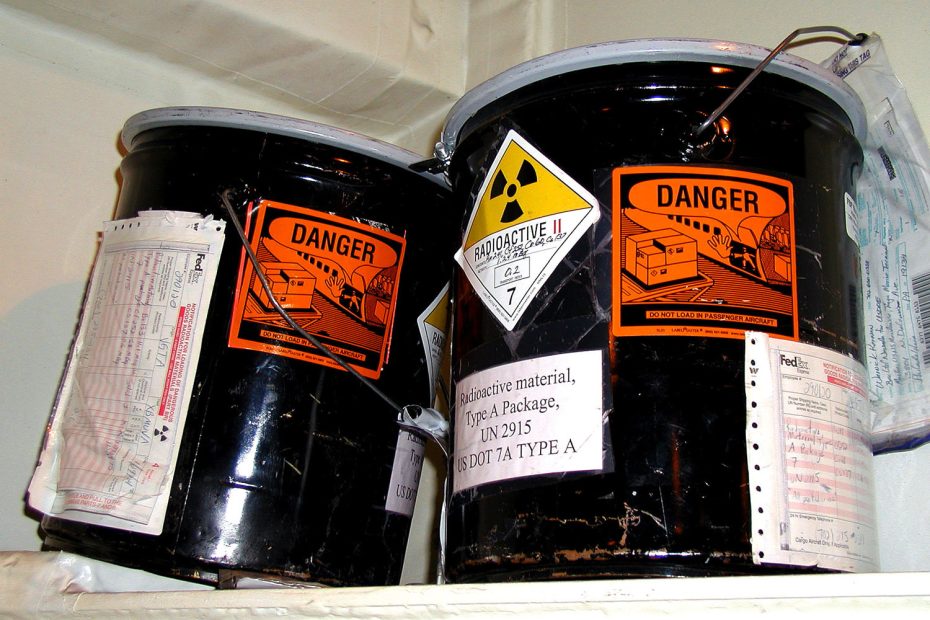
For road transport, the relevant provisions of the ADR agreement apply to radioactive material classified as Class 7 dangerous goods.
Requirements may cover package classification, packaging, labelling, transport documentation, personnel training, authorisations and appropriate safety and security arrangements.
For international projects, responsibilities should be established in advance for each stage of the transport chain, from collection at the manufacturer’s facility to delivery to the authorised location in Croatia.
Management of Disused Radioactive Sources
The management of radioactive sources after the end of their useful life should be considered before they are acquired.
A disused sealed radioactive source cannot simply be disposed of as conventional waste or retained indefinitely without the appropriate regulatory basis.
Depending on the source and contractual arrangements, possible solutions include returning it to the manufacturer or supplier, transferring it to an authorised organisation or another legally permitted management route.
For certain source categories, a contractual arrangement for return of the source is an important part of the documentation required during the import permitting process.
Common Mistakes When Planning Radioactive Source Imports
One recurring issue in international projects is the assumption that authorisations and documentation issued in another country are automatically valid in Croatia.
Although documentation from an experienced international supplier can facilitate the licensing process, it does not replace compliance with Croatian regulatory requirements.
Other difficulties can arise when:
- sources are ordered before import and operational requirements have been assessed
- responsibilities of the importer, end user and transport operator are not clearly distinguished
- source categories and applicable security requirements have not been determined
- storage or operating facilities are prepared without an appropriate technical assessment
- arrangements for managing sources after the end of their useful life are overlooked.
Such issues can lead to shipment delays, requests for additional documentation and unexpected costs related to facility modifications or operational arrangements.
For this reason, it is advisable to assess the applicable regulatory requirements before finalising the purchase or international shipment of radioactive sources.
Professional Support for Radioactive Source Licensing in Croatia
Preparing documentation for importing and using radioactive sources requires knowledge of Croatian legislation, the technical characteristics of the sources and the practical conditions under which they will be used.
Tricij Ltd. provides professional radiation protection consulting services, including assistance with identifying regulatory requirements, preparing technical documentation and obtaining the necessary authorisations for activities involving ionising radiation sources.
Professional support can be particularly valuable for new projects, international suppliers and activities involving higher-category radioactive sources.
For an initial assessment of licensing requirements, the most useful information includes the radionuclide, source activity, intended application, country of origin and proposed location for use or storage in Croatia.
For further information or assistance with radiation protection and licensing procedures in Croatia, please contact Tricij or send an enquiry to info@tricij.hr.