


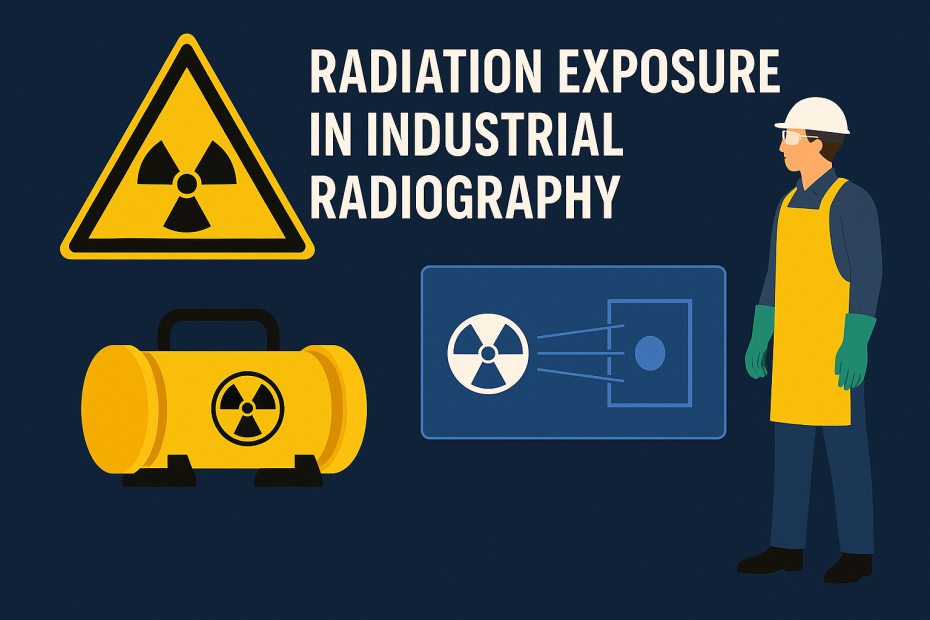
Keywords:
industrial radiography, radiation exposure, radioactive sources, radiation protection, occupational safety, ALARA, radiological safety
Introduction
Industrial radiography uses ionizing radiation for non-destructive testing (NDT) to detect flaws in welds, castings, and metal structures. The most commonly used radioactive sources are Iridium-192 (Ir-192) and Cobalt-60 (Co-60), which emit high-energy gamma rays capable of penetrating dense materials.
While the technique provides excellent image quality and reliability, it also poses significant radiation exposure risks, making proper safety management essential.
Occupational Exposure
Occupational exposure occurs among workers who handle radioactive sources, operate exposure devices, or supervise radiographic operations.
Typical causes include:
- Incomplete source retraction after exposure.
- Inadequate shielding or faulty equipment.
- Working too close to the source without sufficient distance or barriers.
Exposure control relies on the time-distance-shielding principles and the ALARA concept (As Low As Reasonably Achievable).
Workers must use personal dosimeters, receive regular training, and strictly follow operational procedures.
Non-Occupational Exposure
Non-occupational exposure affects individuals not directly involved in radiographic work but who may be nearby – for example, construction or maintenance personnel working close to a radiography site.
These exposures are usually low-level and brief, but risks increase if controlled areas and access restrictions are not properly maintained.
Clear signage, barriers, and communication are crucial to prevent unauthorized entry during radiographic operations.
Accidental Exposure
Accidental or incidental exposures occur due to technical failures, human error, or mishandling of equipment.
Common causes include:
- Damaged or jammed source cables.
- Loss or misplacement of a radioactive source.
- Malfunctioning safety locks or warning indicators.
Such incidents can result in severe radiation doses within seconds.
Organizations must therefore maintain emergency response plans, ensure personnel training, and provide appropriate detection equipment to mitigate the impact.
Conclusion
Ionizing radiation in industrial radiography is a valuable but potentially hazardous tool.
Maintaining safety requires a blend of technical measures, worker education, and a strong safety culture.
Consistent regulatory compliance, equipment maintenance, and awareness of risks are key to preventing radiation accidents and protecting both workers and the public.